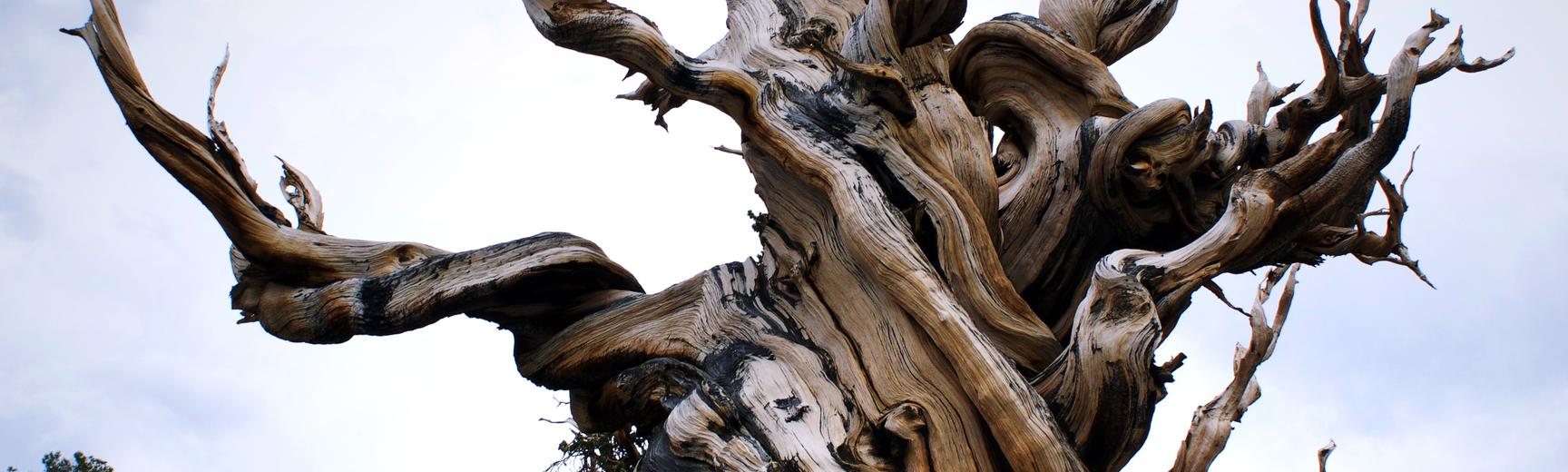
Many types of tree reliably lay down one tree ring every year. The wood in these rings once laid down remains unchanged during the life of the tree. This is very useful as a record of the radiocarbon concentration in the past. If we have a tree that is 500 years old we can measure the radiocarbon in the 500 rings and see what radiocarbon concentration corresponds to each calendar year.
Using very old trees, such as Bristlecone Pines in western USA, it is possible to make measurements back to a few thousand years ago.
To extend this method further we must use the fact that th tree ring widths vary from year to year with changing weather patterns. By using these widths, it is possible to compare the tree rings in a dead tree to those in a tree that is still growing in the same region. By using dead trees of different but overlapping ages, you can build up a library or tree rings of different calendar ages. This has now been done for Bristlecone Pines in the USA and waterlogged Oaks in Ireland and Germany, and Kauri in New Zealand to provide records extending back over the last 14,000 years.
For older periods we are able to use other records with independent age control to tell us about how radiocarbon changed in the past.